Digital vs Analog Tire Gauge: Which One Is Better for Your Vehicle?

Choosing the right tire gauge can make tire maintenance easier and more efficient. This guide compares digital and analog tire gauges, explains their differences, and explores why the Rhino USA 200 PSI Tire Inflator Gauge is a reliable option for various drivers.
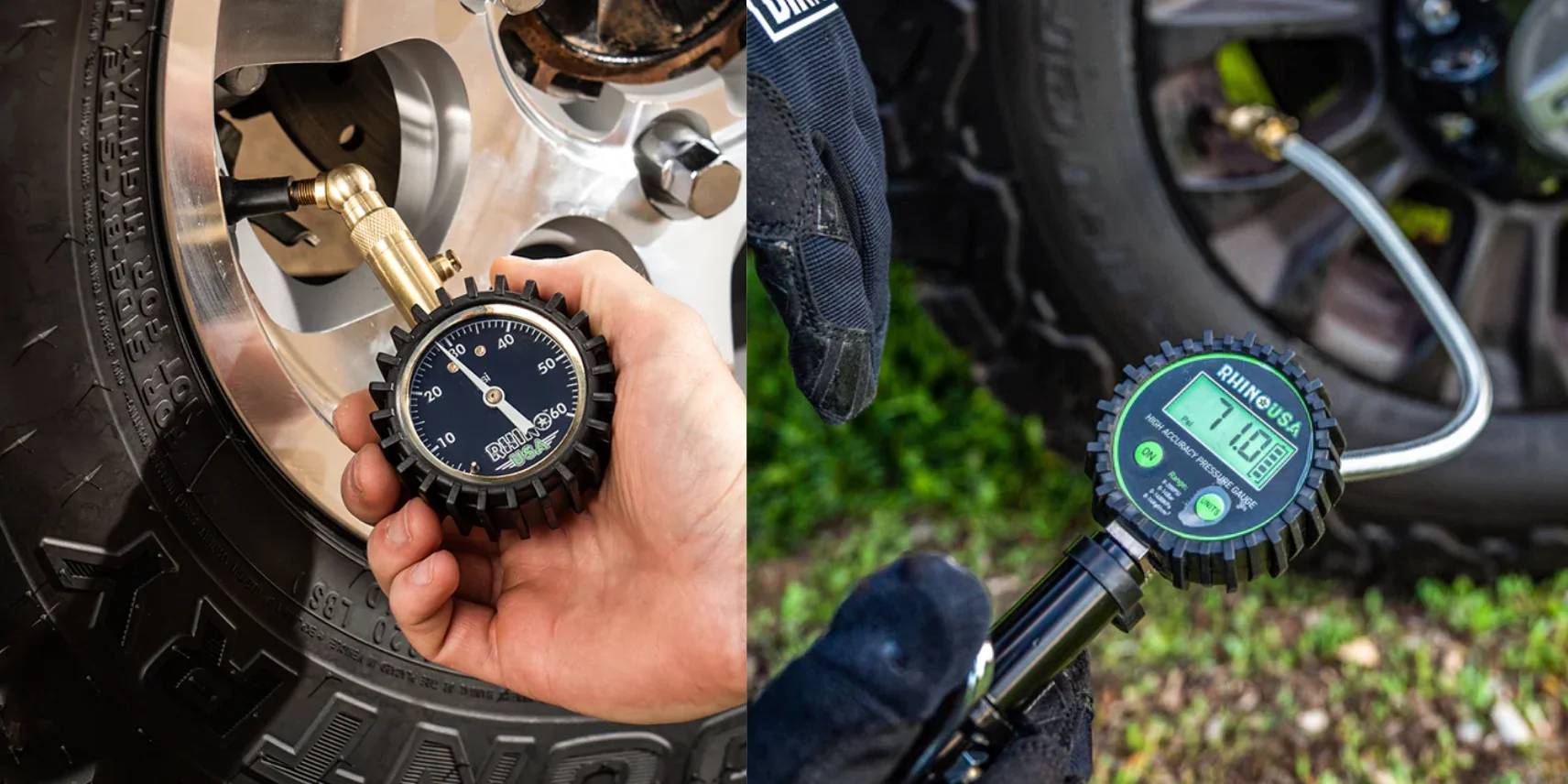
Keeping your tires inflated is one of the simplest ways to guarantee your tires last longer while staying safe on the road. But keeping the right pressure depends on choosing the right tire gauge. That being said, one of the confusions that drivers and vehicle owners get confused over is choosing between an analog and a digital gauge.
Digital gauges focus on precision, convenience, and easily readable measurements, while their analog counterparts are durable and offer dependable performance. Understanding how each option works will help you choose the right gauge for your needs.
Digital vs Analog Tire Gauge: What’s The Difference?
Both digital and analog tire gauges confuse most drivers because both accurately measure the PSI of your tires. A digital tire gauge, especially one from Rhino USA, delivers an instant reading that is easily readable but requires batteries to function. An analog gauge does not need power; however, reading may be trickier. Ultimately, it will come down to convenience, ease, and personal preference as to which you choose.
Understanding Digital and Analog Tire Gauges
While both variations help with keeping proper tire pressure, the primary difference between a digital and an analog tire gauge is how they measure and show tire pressure. So it’s worth taking time to understand the functionality of the two before diving deep into what really makes them different.
Digital Tire Gauges
Digital tire gauges are designed for drivers who prioritize speed and readability. The electronic sensors display the exact PSI on an LCD or LED screen. This makes reading the tire pressure as simple as reading the screen. Most models come with features such as backlit displays and automatic shut-off for nighttime checks or roadside use.
Analog Tire Gauges
Analog tire gauges employ a mechanical dial system to measure pressure. They are valued for their dependable and durable design. As they don’t rely on batteries or use electronic components, these gauges are preferred for long-term storage and demanding environments where reliability matters most.
Key Differences Between Digital and Analog Tire Gauge Visualized
The table below highlights how each option performs in key areas to help you choose the right fit for your needs.
When Should You Choose a Digital or Analog Tire Gauge?
The right tire gauge depends on where you use it, how often you check your tires, and what features matter most to you.
Use an Analog Tire Gauge When You
-
Need a dependable gauge for long-term storage in your vehicle.
-
Regularly go off-roading or work in demanding environments.
-
Want a tool that does not rely on batteries or electronic components.
-
Need a durable option for garages, workshops, or heavy-duty use.
Use a Digital Tire Gauge When You
-
Frequently check tire pressure across multiple vehicles.
-
Need precise PSI readings for small pressure adjustments.
-
Check tires in low-light conditions or during roadside emergencies.
-
Prefer seeing exact numbers instead of reading a traditional dial.
Why the Rhino USA PSI Tire Gauge Is Ideal
For drivers who want the convenience of a digital tire gauge without giving up durability, the Rhino USA 200 PSI Tire Inflator Gauge offers a balanced solution. It combines easy-to-read digital measurements with a rugged design built for regular vehicle maintenance, making it suitable for everything from daily driving to off-road adventures.
-
Backlit digital display provides clear PSI readings in bright or low-light conditions, helping drivers monitor tire pressure while inflating without relying on difficult-to-read dials.
-
Built with steel and brass components, a braided hose, and protective rubber housing, this tire inflator gauge is designed to handle frequent use across cars, trucks, motorcycles, RVs, and off-road vehicles.
-
The swivel chuck makes it easier to connect the gauge to tire valves from different angles, improving convenience during inflation.
-
The integrated bleed valve allows users to release excess air when needed, making it easier to reach the desired tire pressure.
-
With a high-pressure range of up to 200 PSI, the gauge can support a wide variety of vehicles and tire maintenance needs.
-
The included storage bag helps keep the inflator gauge and accessories protected and organized when stored in a garage or vehicle.
FAQs
What is the Difference Between A Tire Gauge And A Tire Pressure Gauge?
A tire pressure gauge measures your tire’s PSI, helping you maintain proper inflation for safety and performance.
Can A Tire Plug Kit Fix Any Flat Tire?
A tire plug kit can repair many small punctures in the tread, but may not work for sidewall damage or large holes.
When Should You Use Tire Deflators?
Tire deflators are useful for quickly lowering tire pressure during off-roading, sand driving, or trail conditions.
While analog gauges are best for drivers who value durability and have no need for power, digital gauges are ideal for accurate and highly readable PSI measurements. If you want the convenience of digital readings combined with rugged construction, the Rhino USA 200 PSI Tire Inflator Gauge is a dependable choice for regular maintenance, off-road use, and emergency tire checks. Explore the range of Rhino USA Tire Gauges today and check out available Rhino USA discount codes to get the best deal.
Stay tuned to SnagVibes for more product breakdowns and in-depth analysis.